Uncategorized

Internet Explorer 7 beta released to the public

Tuesday, January 31, 2006

The long awaited Internet Explorer 7.0 beta preview was released to the public on January 31.

Large amounts of the architecture, including the security framework, have been completely overhauled. Partly as a result of these security enhancements, the browser will be a stand-alone application, rather than integrated with the Windows shell.

The final Beta 2 is scheduled by Microsoft to be released in April, with the full version scheduled for the Summer of 2006.

According to Microsoft’s announcement, the beta will only run on Windows XP Service Pack 2 systems, but the final release version is intended to be able to run on Windows Vista, Windows XP Professional x64 Edition, and Windows Server 2003 as well.

Version 7 includes a number of new features.

  • Improved rendering engine – Internet Explorer’s rendering engine, codenamed Trident has been completely rewritten to compete with the faster rendering engines of Opera and Firefox.
  • Tabbed Browsing – users can now have several web pages in the same window via “tabs”.
  • Quick Tabs – enables users to view thumbnail images of all open tabs in one view.
  • Tab Groups – enables users to organize multiple tabs in the same category as a single Tab Group that can be saved as a Favorite and the user can open all the sites in the Tab Group with a single click on the arrow to the right of the folder.
  • Page zoom – enables users to increase or decrease the page size for easier viewing.
  • IDN support
  • RSS Support – Version 7.0 now supports RSS, which allows users to gather “news feeds” from web sites that have RSS support. Microsoft implements RSS in a shared library, known as a DLL, so that third party developers can develop their own RSS-enabled applications.
  • Alpha transparency – Version 7.0 now has native support for PNG alpha transparency. This allows certain image (PNGs) to have opaque areas that can blend in with other images and text.
  • OpenSearch Extensions – Users of version 7.0 can now use search engines by typing in search terms directly from the browser’s toolbar.
  • Administration improvements – All previous and new features are manageable via Group Policy, including the Phishing Filter and all browser add-ons.
  • Improved CSS support – Version 7.0 has improved CSS support, which means Internet Explorer will now render pages closer to the method defined by the W3C, a standards body for World Wide Web technologies. This means web page designers and developers will have an easier time designing web sites and applications to look the same on all web browsers.
  • Improved AJAX functionality – Applications that use a web development technique called AJAX to make interactive web applications will run more efficiently because Microsoft has included support for its main component, the XMLHttpRequest Object, into the browser. Previous versions of Internet Explorer required a helper application, called an ActiveX Object to implement this functionality (a good example of an AJAX application is Google’s popular Google Maps application.
  • Enhanced security – Microsoft has attempted to fix a number of security issues with how Internet Explorer behaves. This includes:
    • Protected Mode – In Protected Mode, Internet Explorer 7 in Windows Vista is completely unable to modify user or system files and settings.
    • Internet Explorer 7.0 is a stand-alone application, rather than integrated with the Windows shell like version 6.0. This means that you can no longer open a folder, type in a URL and get a web page.
    • URL Handling Protections.
    • Protection Against Cross-Domain Scripting Attacks.
    • Anti-Phishing and Anti-Spoofing filters.
    • Security Status Bar – color-coded visual and icons cues to the safety and trustworthiness of a Web site.

The current release is intended for compatibility testing by developers and IT professionals, and is not aimed at the general public.

Retrieved from “https://en.wikinews.org/w/index.php?title=Internet_Explorer_7_beta_released_to_the_public&oldid=425351”
Uncategorized

Denny’s Super Bowl free ‘Grand Slam Breakfast’ brings 2 million diners

Friday, February 6, 2009

Denny’s 1,600 chain restaurants across North America, Puerto Rico and Canada, were slammed for eight hours Tuesday with hungry patrons standing on sidewalks for nearly two hours to take advantage of the $5.99 “Grand Slam Breakfast” giveaway.

Denny’s, a dining chain with annual revenue of about $900 million, has advertised in a TV commercial Sunday during the Super Bowl XLIII that it would give away its signature breakfast from 6 a.m. until 2 p.m. local time Tuesday, at all its restaurants in the U.S., Canada and Puerto Rico, while supplies lasted.

Denny’s Diner has promoted the iconic dish giveaway heavily, with a bold 30-second appeal ad that aired during the third quarter of the Super Bowl 43 on Sunday, plus another 15-second ad during the post-game show, offering a free breakfast to some 90 million viewers. In addition, it has placed a full-page ad in USA Today‘s Monday edition. The promotion was further announced on The Today Show and notices were also sent out to the chain’s “Denny’s Breakfast Club” members.

The NBC ad, which was bought to unveil a new promotion for customers squeezed by the recession, may have cost as much as $3 million, said Nelson Marchioli, CEO of Denny’s Corp. Super Bowl XLIII’s 30-second commercial time slot costs $2.4 million–$3 million for the airtime alone, excluding production and talent costs.

The game was televised live by the US NBC Sunday Night Football and Canada’s CTV Television Network. BayTSP has reported that, “as of 10 a.m. Wednesday, commercials that initially aired during NBC’s Super Bowl XLIII broadcast subsequently had been watched online more than 28 million times.”

“The promotion has a total cost of $5 million U.S., which includes $3 million for the commercial on NBC,” said a Denny’s spokesman, noting also that the company received about $50 million in news coverage, most of which was positive. According to a Denny’s representative, two million people walked through the restaurant chains’ doors Tuesday, and each Denny’s restaurant served an average of 130 Grand Slams per hour.

With the “Denny’s Feeds America” promotion, the company has reported 14 million hits on its Web site between Sunday night and Monday morning. Denny’s shares rose 6 cents, or 3.1 percent, to $1.98 in afternoon trading. The stock has traded in a range of $1.18 to $4.10 over the past 52 weeks.

“Denny’s free Grand Slam” has ranked in the top 10 Google searches early Tuesday and fell to No. 18 by the end of the promotion, while “denny s locations” was #9 on Google Trends, which tracks fast-rising searches. It has also held spots No. 1 (Denny’s) and 7 (Grand Slam) on Twitter‘s trending topics. It has generated much chat on Twitter, garnering 1,700 tweets on Tuesday, compared with its average of 59. Doritos, winner of the USA TODAY survey for best Super Bowl spot ad, had 933 mentions after reaching a peak of almost 3,300.

The idea of the TV ad was to get people to come in and re-evaluate Denny’s Diner. “A lot of people have forgotten what Denny’s is, or they think they know, while we’ve come out with a whole lot of new products. We felt like we needed to jump start the brand,” Denny’s Chief Marketing and Innovation Officer Mark Chmiel said.

“We’re celebrating the Grand Slam this year,” Chmiel said. According to the company’s financial data, on January 15 Denny’s reported systemwide comparable-store sales for the fourth quarter were down 6.1 percent, compared to a 0.2 percent decline from the same period in 2007.

According to Robert Gonzalez, public relations company Hill & Knowlton spokesman, Denny’s has expected at least 2 million people to eat a free Grand Slam by the end of the promotion. “Every restaurant is packed with people and lines,” Gonzalez said. “Everything today is about fast. People are on the go, and they’re eating fast food. It’s cutting into sit-down dining,” he added.

“Each of the more than 1,500 Denny’s were planning to make about 100 Grand Slams an hour,” Denny’s spokeswoman Cori Rice said. It had predicted it will have served about 1,400 people per location, more than five times the normal volume. “Grand Slam Breakfast” is a four-item option on its menu, consisting of two pancakes, two eggs, two strips of bacon and two sausage links. It weighs in at 44 grams of fat, 56 carbohydrates and 770 calories.

Nationwide, Denny’s expected to sell about 2 million Grand Slams — about 15 percent of the annual tally. According to Mark Chmiel, chief marketing operator and executive vice president, the diner chain has reported approximately 2 million meals worth more than $12 million were given away nationwide and each Denny’s restaurant served an average of 130 Grand Slams per hour. It estimated it has earned about $50 million worth of public relations following the free Grand Slam campaign, Chmiel said.

The company is also experimenting with a Grand Slam Burrito and also has introduced for this year, a Grand Slamwich, which includes eggs, bacon, sausage and cheese between two slices of bread, with a teaspoon serving. “It already has shown strong consumer appeal,” said Chmiel. The company has received flood of e-mails and letters proving the positive impact of the Grand Slam campaign and commercials on its customers.

Chmiel also announced he’s planning a third major promotion in this year’s third quarter, which happens to include another major sporting event, the World Series. “That’s one we’re definitely looking at,” he said.

Jobless Paris Winslow of downtown San Francisco, California has joined the long line which stretched from the front door on Mission Street, between Fourth and Fifth streets, to the corner of Fourth and up the block. “The economy is getting kind of scary. This line looks like those pictures of soup kitchen lines during the 1929 Great Depression,” Winslow said.

“I came all the way from San Francisco for a free $6 meal, Isn’t that pathetic? A year ago, I never would have done this. These days I’m willing to put my ego on the back burner,” said Stephen Weller, a jobless contractor who waited with his dog, Emmett. California Denny’s restaurant managers have issued rain checks (for free chilled meals, as security backed by actual bacon) to anyone who failed to get in by the 2 p.m. deadline.

A big eater could also “Slam It Up” by adding any two additional items for 99 cents each to their meal. Customers on Tuesday were also handed “bounceback” coupon books that include offers for additional free menu items with purchases. Chicago Tribune reporter Kevin Pang has eaten five free Grand Slams on Tuesday at five different Denny’s Diners in four hours. He claims to have consumed 4,100 calories at Harwood Heights, 5:36 a.m, at Schiller Park, 6:22 a.m., at Franklin Park, 7:08 a.m., at Melrose Park, 7:41 a.m. and at Grand Slam No. 5 Oak Park, 8:57 a.m.

“The Grand Slam has always been a Denny’s favorite. This free offer is our way of reacquainting America with Denny’s real breakfast and with the Denny’s brand,” Denny’s CEO Nelson Marchioli said in a statement. In 1977s, the Grand Slam started as a baseball-related promotion in Atlanta, Georgia. Its normal price averages around $5.99. Marchioli said the event was also a way to kick-off its “Year of the Grand Slam” promotion. Denny’s claimed it has sold 12.5 million Grand Slams a year.

“The economy’s tough and people are jumping all the way to fast food to try to figure it out. We all use fast food, whether it’s for time or convenience or for money. But you can go to Denny’s and you don’t have to give up a real breakfast and that was the whole focus of our commercial,” Marchioli explained. McDonald’s (MCD, Fortune 500) has done well during this economic meltdown since the global recession pushes people toward less expensive dining options.

McDonald’s has announced plans Wednesday to open 175 new restaurants in China this year despite the global economic crisis, thereby increasing the number of outlets in China by 17 percent, from 1,050 currently. Last month, McDonald’s 2008 net profit has risen 80 percent from 2007 to 4.3 billion dollars.

Marchioli has also introduced Denny’s $4 Weekday Express Slam, which is a streamlined version of the Grand Slam. “I want to take back share. For too long, we have allowed others to take share, whether it was Starbucks or McDonald’s. They’re fine competitors and I don’t expect to take all their business from them, but I’d like a little bit back,” Marchioli noted.

According to Rafi Mohammed, author of “The Art of Pricing,” people love free. “It triggers a Pavlovian response in people,” said Mohammed. If Pavlov’s dogs salivate when a bell rings, Denny’s free Grand Slam breakfast has attracted 2 million hungry customers. “I believe free maximizes trial and doesn’t devalue a product as long as it is a rare event. Aside from the cost, the major downside is that it attracts customers who truly have no intention of coming back,” he added.

According to University of Portland consumer psychology professor Deana Julka, people flock to free promotions amid just a few dollars saving because there’s nothing in life for free. “So when there’s something out there that costs nothing, it creates a psychological rush. Especially in these times when people feel overtaxed or overburden, there’s an internal reward people feel by getting something for free,” she said. “It’s being thrifty and feeling like you beat the system. Free really hits the spot for a lot of people,” Julka added.

“Free is an emotional hot button. When free is concerned, there is no downside – or, at least, we don’t see the downside immediately. So we overvalue everything that is free. People love free stuff, particularly when money’s tight,” said Dan Ariely, a business professor at Duke University, author of “Predictably Irrational: The Hidden Forces That Shape Our Decisions.”

Experts, however, explained these moves need to be done sparingly, since giveaways can teeter in the balance between desperation and a well designed marketing ploy. “Giving your product away for free is not worth it because it undermines your brand value,” said branding expert Rob Frankel, saying people are attached to the idea of it being free, than the actual product itself.

Free giveaways are not anything new in the food industry. “It just feels good when you can get something for free and not have to worry about it coming out of your wallet,” Frankel noted. Dunkin’ Donuts and Panera Bread all have had free coffee and food promos last year. “In November, Starbucks gave away free cup of coffee to anyone who came in on Election Day. Have you taken a look at how Starbucks is doing now?” Last week it has announced it would shut down 300 stores, in addition to the 600 it already planned to close.

On February 24, IHOP will be offering a free shortstack to every customer to encourage donations (in place of the cost) for Childrens Miracle Network. The International House of Pancakes (IHOP) is a United States-based restaurant chain that specializes in breakfast foods and is owned by DineEquity. The chain had more than 1950 restaurants in all 50 states, the U.S. Virgin Islands, Canada and Mexico. Since 2006, IHOP’s National Pancake Day celebration has raised over $1.85 million. In 2008, over 1.5 million pancakes (12 miles high if they were stacked) were given to customers for donations.

Denny’s (“Denny’s Diner”) is a full-service diner/family restaurant chain in the United States. It operates over 2,500 restaurants in the United States (including Puerto Rico), Canada, Curaçao, Costa Rica, El Salvador, Jamaica, Japan, Mexico, and New Zealand). The resto chain is known for always being open, serving breakfast, lunch, dinner, and dessert around the clock.

Today, Denny’s operates about 1,600 restaurants in all 50 U.S. states, Canada and Mexico. There are also about 578 Denny’s restaurants in Japan operated under a license by a subsidiary of Seven & I Holdings, seven Denny’s locations in New Zealand, and approximately 38 Denny’s diners in the United States. Denny’s headquarters is now located in Spartanburg, South Carolina, headquarters of the parent company Trans World Corporation that acquired Denny’s in 1987.

Denny’s was historically notable for offering a free meal to anyone on their birthday. The offer included a limited number of meal options from a special birthday menu. The promotional ritual ceased in 1993, though occasionally individual franchises will continue the tradition.

In 2008, Denny’s has ceased to be in the ranks among the top diner chains in the $83 billion breakfast market, whose top five firms — McDonald’s, Starbucks, Dunkin’ Donuts, Burger King and IHOP — accounted for 22 percent of the volume. “A lot of consumers have written Denny’s off their let’s-go-there list,” said Ron Paul, president of Technomic, a consulting firm.

Super Bowl XLIII was an American football game between the American Football Conference champion Pittsburgh Steelers (15–4) and the National Football Conference champion Arizona Cardinals (12–8) to decide the National Football League (NFL) champion for the 2008 NFL season. It was played on February 1, 2009, at Raymond James Stadiumin Tampa, Florida. It has an attendance of 70,774 and 98.7 million viewers. Pittsburgh earned its sixth Super Bowl win, thus securing sole possession of the record for most Super Bowl wins.

Retrieved from “https://en.wikinews.org/w/index.php?title=Denny%27s_Super_Bowl_free_%27Grand_Slam_Breakfast%27_brings_2_million_diners&oldid=1521034”
Facial Plastic Surgery

Botox In Laserase Belfast: How To Be Safe, In A Largely Unregulated Industry

Botox in laserase Belfast: How to be safe, in a largely unregulated industry

by

Therese

In the UK, there are approximately 5,000 clinics, spas and salons which offer injectable treatments such as Botox (Botulinum Toxin), they carry out 200,000 procedures annually. In 2009 the number of procedures increased by 25%.

[youtube]http://www.youtube.com/watch?v=N_SYAJSmQO4[/youtube]

In August 2010, a government backed register was launched for those who offer injectable cosmetic treatments, such as Botox. Those who meet the standards as set out for The Independent Healthcare Advisory Services register, will receive a quality assurance mark. The IHAS hope that their new register will discourage ‘Botox parties’ and unqualified individuals from attempting these procedures. They are also keen that the treatments are only carried out in clean and safe clinical locations. The IHAS require all who sign up to their register to complete a face to face consultation prior to any treatment, which will prevent drop in clinics. The IHAS believe injectable treatments should only be carried out those with relevant medical training such as Doctors and registered Nurses. They are trying to eliminate unqualified Beauticians from the industry in an attempt to make the procedures safer. Due to the nature of the substance ‘Botulinum Toxin’, things can go wrong (in a very small number of cases) and in the event of a patient having an allergic reaction, the IHAS feel that beauticians are unqualified and unprepared to potentially have to save someone’s life. In Belfast, believe it or not, some people are putting themselves at risk by receiving cheap treatments from inexperienced providers. Some people are prepared to have a potentially poisonous substance injected into their skin by someone who has no formal qualifications and does not fully understand what they are doing. Unqualified providers of Botox who don’t inject it correctly can cause lumps on your skin, asymmetry and even permanent damage to your skin. Is it really worth the risk? Dr Donal Mckeown, of Laserase Medical Skincare Clinic in Belfast offers advice to anyone considering Botox, or any other injectable treatment. Dr McKeown is a graduate of Queens University Belfast Medical School and is a member of The British Association of Cosmetic Doctors (BACD). He urges those who are considering such treatments to make sure the provider is safe before they receive any treatment. Ensure they are fully registered with the General Medical Council (GMC) and The British Association of Cosmetic Doctors (BACD). Also ensure the clinic is fully registered with the Regulation and Quality Improvement Authority (RQIA).

Laserase medical skin care clinic and cosmetic surgery clinic which is specialist in acne treatments, cosmetic surgery, sculptra, stretch marks, laser Hair removal and

botox injections

in Belfast and Northern Ireland UK.

Article Source:

ArticleRich.com

Uncategorized

GM and Chrysler receive Canadian loans amid US restructuring ultimata

Friday, April 3, 2009

General Motors (GM) and Chrysler will receive bridge loans from the government of Canada and the provincial government of Ontario, however no more will be forthcoming from either Canadian or US governments unless the companies can reinvent themselves.

“This is a regrettable but necessary step to protect the Canadian economy. We are doing this on the assumption that we obviously cannot afford either in the United States or Canada a catastrophic short-term collapse.” said Stephen Harper, Prime Minister of Canada.

“We cannot, we must not, and we will not let our auto industry simply vanish. This industry is, like no other, an emblem of the American spirit; a once and future symbol of America’s success,” said Barack Obama, President of the United States. “These companies – and this industry – must ultimately stand on their own, not as wards of the state.”File:Sinsheim quer.jpg

Chrysler will receive CA$1 billion and may in fact be eligible for as much as CA$4 billion. If Chrysler succeeds in the next 30 days with a restructuring plan it would be eligible for a US$6 billion loan. A part of Chrysler’s restructuring plan must include a partnership with Fiat within 30 days to appease the US administration. Fiat is a supplier of smaller fuel-efficient vehicles, and the merger will help Chrysler to be viable in the North American market. A Chrysler court bankruptcy would inevitably lead to it being sold off.

As a part of Chrysler’s restructuring plans, Tom LaSorda, the president of Chrysler announced that Canadian operations would fold if it does not receive both the US commitment of $2.3 billion of aid and a new Canadian Auto Workers CAW contract to reduce all-in costs by CA$19 per hour. As a result of this announcement Chrysler’s auto sales volume in Canada dropped 23% compared to March of 2008.

GM has until the end of May to restructure its company to receive up to CA$7.5 billion. As part of the companies restructuring, General Motor’s chief executive Rick Wagoner was replaced Sunday with Fritz Henderson, the current chief operating officer. Henderson spoke out on Tuesday that GM has submitted a restructuring plan which would close five plants, and this may be increased to meet the requirements for financial aid. He is in full compliance with Obama’s auto task force to seek bankruptcy if GM cannot negotiate with their unions, bondholders and others.

GM recently brought forward the “GM Total Confidence” program providing consumer purchase protection for customers who lose their job for economic reasons within the first two years from purchase. As a result of Chrysler’s restructuring announcement in Canada, GM’s Canadian vehicle sales volume fell only 17.3% compared to 2008, an increase from the previous month.

GM must reduce some of its legacy costs which include its pensions and union health care costs. A part of GM’s ailments arose from investing in supplying truck and SUVs during an economy of high gas prices when consumers were demanding fuel efficient vehicles.

Tony Clement, Canada’s Minister of Industry, is hoping that the CAW will support the restructuring process and re-negotiate their agreement. Whereas a United Auto Workers negotiator has said, “I don’t see how the UAW will do anything until they see what the bondholders will give up.”

The Obama administration is looking toward bankruptcy proceedings for the automakers, “as a mechanism to help them restructure quickly and emerge stronger. [It will] quickly clear away old debts that are weighing them down. What we are asking is difficult. It will require hard choices by companies. It will require unions and workers who have already made painful concessions to make even more. It will require creditors to recognise that they cannot hold out for the prospect of endless government bailouts.” said Obama.

The auto parts suppliers and IT software exporters in India have already been affected by the declining auto sales. GM and Chrysler software contracts provide US$300 to 350 million a year to vendors in India. As well these two major automakers usually award US$1 billion contracts to auto parts suppliers. “We are worried and closely watching the developments in the US to gauge the impact. The decline in auto sales in the US has already hit the order books of Indian suppliers,” said a Delhi auto parts supplier.

“Going forward, the industry will undoubtedly be smaller, but if our efforts are successful it will be viable and it will support good jobs for Canadians,” said Clements.

Betty Sutton, Ohio’s Congresswoman put forward the CARS act which provides a US$3,000 to 5,000 incentive for those who trade in their vehicle for a fuel-efficient car. “It clearly stimulates the economy, and it gets the consumer into the showroom and gets them buying again. But importantly — and this is what I particularly like about it — it really helps the environment quite a bit in two respects.” said William Clay Ford Jr., executive chairman of Ford Motor Co.

Ford Motor Company has not come forward with requests for assistance.

Since December GM and Chrysler have received US$17.4 billion government loans.

HAVE YOUR SAY
How should the automakers re-invent themselves?
Add or view comments
Retrieved from “https://en.wikinews.org/w/index.php?title=GM_and_Chrysler_receive_Canadian_loans_amid_US_restructuring_ultimata&oldid=4455686”
Uncategorized

Kennedy Center names 2007 honors recipients

Friday, September 14, 2007

The Kennedy Center announced that its 30th presentation of the Kennedy Center Honors would go to pianist Leon Fleisher, comedian Steve Martin, singer Diana Ross, director Martin Scorsese and musician Brian Wilson. The Center was opened to the public in 1971 and was envisioned as part of the National Cultural Center Act, which mandated that the independent, privately-funded institution would present a wide variety of both classical and contemporary performances, commission the creation of new artistic works, and undertake a variety of educational missions to increase awareness of the arts.

In a statement, Kennedy Center Chairman Stephen A. Schwarzman said that “with their extraordinary talent, creativity and perseverance, the five 2007 honorees have transformed the way we, as Americans, see, hear and feel the performing arts.”

Fleisher, 79, a member of the Peabody Institute‘s music faculty, is a pianist who lost use of his right hand in 1965 due to a neurological condition. He became an accomplished musician and conductor through the use of his left hand. At 67, he regained the use of his right hand. With the advent of Botox therapy, he was once more able to undertake two-hand performances in 2004, his first in four decades. “I’m very gratified by the fact that it’s an apolitical honor,” Fleisher said. “It is given by colleagues and professional people who are aware of what [an artist] has done, so it really is apolitical — and that much more of an honor.”

Martin, 62, a comedian who has written books and essays in addition to his acting and stand-up comedy career, rose to fame during his work on the American television program Saturday Night Live in the 1970’s. Schwarzman praised his work as that of a “renaissance comic whose talents wipe out the boundaries between artistic disciplines.” Martin responded to the honor saying, “I am grateful to the Kennedy Center for finally alleviating in me years of covetousness and trophy envy.”

Ross, 63, was a product of Detroit‘s Brewster-Douglass Projects when as a teeager she and friends Mary Wilson and Florence Ballardis formed The Supremes, a ground-breaking Motown act. She portrayed singer Billie Holiday in the 1972 film Lady Sings the Blues, which earned her an Oscar nomination and a Golden Globe award. “Diana Ross’ singular, instantly recognizable voice has spread romance and joy throughout the world,” said Schwarzman. Ross said she was “taken aback. It is a huge, huge honor and I am excited to be in this class of people.”

Scorsese, 64, is one of the most accomplished directors the United States ever produced, whose work includes Mean Streets, Taxi Driver, GoodFellas, Cape Fear, The Last Temptation of Christ and The Departed, for which he won a 2006 Academy Award for Best Director after being nominated eight times. Scorsese said, “I’m very honored to be receiving this recognition from the Kennedy Center and proud to be joining the company of the very distinguished individuals who have received this honor in years past.”

Wilson, 65, along with his brothers Dennis and Carl, formed the Beach Boys in 1961. They had a series of hits that included “Surfin’ U.S.A.” and “Wouldn’t It Be Nice.” Their 1966 album Pet Sounds is considered one of the most influential recordings in American music. “This is something so unexpected and I feel extremely fortunate to be in the company of such great artists,” said Wilson, who is currently on tour.

The Kennedy Center’s board of trustees is responsible for selecting honorees for “lifetime contributions to American culture through the performing arts.” Previous honorees, including Elton John and Steven Spielberg, also submitted recommendations. A wide variety of people were under consideration, including Emanuel Ax, Evgeny Kissin, Renee Fleming, Laurence Fishburne, Francis Ford Coppola, Melissa Etheridge and Kenny Chesney.

President Bush and first lady Laura Bush will attend the center’s presentation at its opera house on December 2, 2007, which will broadcast on December 26 on CBS.

Retrieved from “https://en.wikinews.org/w/index.php?title=Kennedy_Center_names_2007_honors_recipients&oldid=4281881”
Uncategorized

Kennedy Center names 2007 honors recipients

Friday, September 14, 2007

The Kennedy Center announced that its 30th presentation of the Kennedy Center Honors would go to pianist Leon Fleisher, comedian Steve Martin, singer Diana Ross, director Martin Scorsese and musician Brian Wilson. The Center was opened to the public in 1971 and was envisioned as part of the National Cultural Center Act, which mandated that the independent, privately-funded institution would present a wide variety of both classical and contemporary performances, commission the creation of new artistic works, and undertake a variety of educational missions to increase awareness of the arts.

In a statement, Kennedy Center Chairman Stephen A. Schwarzman said that “with their extraordinary talent, creativity and perseverance, the five 2007 honorees have transformed the way we, as Americans, see, hear and feel the performing arts.”

Fleisher, 79, a member of the Peabody Institute‘s music faculty, is a pianist who lost use of his right hand in 1965 due to a neurological condition. He became an accomplished musician and conductor through the use of his left hand. At 67, he regained the use of his right hand. With the advent of Botox therapy, he was once more able to undertake two-hand performances in 2004, his first in four decades. “I’m very gratified by the fact that it’s an apolitical honor,” Fleisher said. “It is given by colleagues and professional people who are aware of what [an artist] has done, so it really is apolitical — and that much more of an honor.”

Martin, 62, a comedian who has written books and essays in addition to his acting and stand-up comedy career, rose to fame during his work on the American television program Saturday Night Live in the 1970’s. Schwarzman praised his work as that of a “renaissance comic whose talents wipe out the boundaries between artistic disciplines.” Martin responded to the honor saying, “I am grateful to the Kennedy Center for finally alleviating in me years of covetousness and trophy envy.”

Ross, 63, was a product of Detroit‘s Brewster-Douglass Projects when as a teeager she and friends Mary Wilson and Florence Ballardis formed The Supremes, a ground-breaking Motown act. She portrayed singer Billie Holiday in the 1972 film Lady Sings the Blues, which earned her an Oscar nomination and a Golden Globe award. “Diana Ross’ singular, instantly recognizable voice has spread romance and joy throughout the world,” said Schwarzman. Ross said she was “taken aback. It is a huge, huge honor and I am excited to be in this class of people.”

Scorsese, 64, is one of the most accomplished directors the United States ever produced, whose work includes Mean Streets, Taxi Driver, GoodFellas, Cape Fear, The Last Temptation of Christ and The Departed, for which he won a 2006 Academy Award for Best Director after being nominated eight times. Scorsese said, “I’m very honored to be receiving this recognition from the Kennedy Center and proud to be joining the company of the very distinguished individuals who have received this honor in years past.”

Wilson, 65, along with his brothers Dennis and Carl, formed the Beach Boys in 1961. They had a series of hits that included “Surfin’ U.S.A.” and “Wouldn’t It Be Nice.” Their 1966 album Pet Sounds is considered one of the most influential recordings in American music. “This is something so unexpected and I feel extremely fortunate to be in the company of such great artists,” said Wilson, who is currently on tour.

The Kennedy Center’s board of trustees is responsible for selecting honorees for “lifetime contributions to American culture through the performing arts.” Previous honorees, including Elton John and Steven Spielberg, also submitted recommendations. A wide variety of people were under consideration, including Emanuel Ax, Evgeny Kissin, Renee Fleming, Laurence Fishburne, Francis Ford Coppola, Melissa Etheridge and Kenny Chesney.

President Bush and first lady Laura Bush will attend the center’s presentation at its opera house on December 2, 2007, which will broadcast on December 26 on CBS.

Retrieved from “https://en.wikinews.org/w/index.php?title=Kennedy_Center_names_2007_honors_recipients&oldid=4281881”
Facial Plastic Surgery

A Closer Look At The Things You Need To Understand About Botox

A Closer Look at the Things You Need to Understand About BOTOX

by

tobifistcher

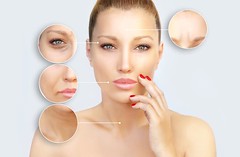
BOTOX is the trade name for a chemical developed from Clostridium botulinum bacteria. Muscles are prevented from moving or contracting if the chemical is injected to them in small amounts. BOTOX relaxes the muscles and helps make the skin appear smoother with fewer wrinkles.

A BOTOX treatment is great for several months. It is incredibly effective to clear away wrinkles around the eyes, forehead, and neck where muscles are almost never used. However, BOTOX does not work when put on the muscles around the mouth because these are utilized more frequently. BOTOX will also be inadequate for wrinkles that are created by sunlight damage.

If you are a resident of Los Angeles and wish to have BOTOX therapies, invest time to look for a competent physician. Select a licensed Los Angeles specialist who is extremely familiar with BOTOX treatments, has great credentials, is affiliated with a local health care facility, and has modern clinic facilities and devices. This physician will take into account your medical history and review the whole treatment as well as your expectations from it.

[youtube]http://www.youtube.com/watch?v=o3JbCKnGH2c[/youtube]

A BOTOX therapy takes about ten to fifteen minutes. You may feel a sting because anesthetics are not used in the procedure. After the therapy, patients are urged to stand and sit only. They really should not lie down or contact the injection site to stop the BOTOX chemical from migrating to muscles not included in the treatment.

BOTOX therapies have no downtime. Full effect usually takes fourteen days, but marked progress can be noticed in 3 to 4 days. The therapy is perfect for 3 to 6 months. When the outcomes of BOTOX begin to wane, you have to revisit your

Los Angeles BOTOX

doctor for retreatment.

If you want to keep the wrinkles away, bear in mind that

BOTOX Beverly Hills

doctors administer can be costly, so you need to save up for it or incorporate it in your budget. The best thing is that several BOTOX therapy specialists accept most modes of payment. You can pay in cash, check, credit cards, or through payment plans with financing firms. Realize which mode of payment is suitable for you and consult your doctor during the initial consultation if this is suitable to him/her.

Like most medical operations, BOTOX treatments also have their fair share of advantages and drawbacks. Discuss this with the

BOTOX Los Angeles

specialist who will perform the treatment. For more details regarding BOTOX, you can browse the Internet for forums that discuss the subject.

If you have questions, please visit us at www.TheKestClinic.com for complete details and answers.

Article Source:

ArticleRich.com

Uncategorized

Cleveland, Ohio clinic performs US’s first face transplant

Thursday, December 18, 2008

A team of eight transplant surgeons in Cleveland Clinic in Ohio, USA, led by reconstructive surgeon Dr. Maria Siemionow, age 58, have successfully performed the first almost total face transplant in the US, and the fourth globally, on a woman so horribly disfigured due to trauma, that cost her an eye. Two weeks ago Dr. Siemionow, in a 23-hour marathon surgery, replaced 80 percent of her face, by transplanting or grafting bone, nerve, blood vessels, muscles and skin harvested from a female donor’s cadaver.

The Clinic surgeons, in Wednesday’s news conference, described the details of the transplant but upon request, the team did not publish her name, age and cause of injury nor the donor’s identity. The patient’s family desired the reason for her transplant to remain confidential. The Los Angeles Times reported that the patient “had no upper jaw, nose, cheeks or lower eyelids and was unable to eat, talk, smile, smell or breathe on her own.” The clinic’s dermatology and plastic surgery chair, Francis Papay, described the nine hours phase of the procedure: “We transferred the skin, all the facial muscles in the upper face and mid-face, the upper lip, all of the nose, most of the sinuses around the nose, the upper jaw including the teeth, the facial nerve.” Thereafter, another team spent three hours sewing the woman’s blood vessels to that of the donor’s face to restore blood circulation, making the graft a success.

The New York Times reported that “three partial face transplants have been performed since 2005, two in France and one in China, all using facial tissue from a dead donor with permission from their families.” “Only the forehead, upper eyelids, lower lip, lower teeth and jaw are hers, the rest of her face comes from a cadaver; she could not eat on her own or breathe without a hole in her windpipe. About 77 square inches of tissue were transplanted from the donor,” it further described the details of the medical marvel. The patient, however, must take lifetime immunosuppressive drugs, also called antirejection drugs, which do not guarantee success. The transplant team said that in case of failure, it would replace the part with a skin graft taken from her own body.

Dr. Bohdan Pomahac, a Brigham and Women’s Hospital surgeon praised the recent medical development. “There are patients who can benefit tremendously from this. It’s great that it happened,” he said.

Leading bioethicist Arthur Caplan of the University of Pennsylvania withheld judgment on the Cleveland transplant amid grave concerns on the post-operation results. “The biggest ethical problem is dealing with failure — if your face rejects. It would be a living hell. If your face is falling off and you can’t eat and you can’t breathe and you’re suffering in a terrible manner that can’t be reversed, you need to put on the table assistance in dying. There are patients who can benefit tremendously from this. It’s great that it happened,” he said.

Dr Alex Clarke, of the Royal Free Hospital had praised the Clinic for its contribution to medicine. “It is a real step forward for people who have severe disfigurement and this operation has been done by a team who have really prepared and worked towards this for a number of years. These transplants have proven that the technical difficulties can be overcome and psychologically the patients are doing well. They have all have reacted positively and have begun to do things they were not able to before. All the things people thought were barriers to this kind of operations have been overcome,” she said.

The first partial face transplant surgery on a living human was performed on Isabelle Dinoire on November 27 2005, when she was 38, by Professor Bernard Devauchelle, assisted by Professor Jean-Michel Dubernard in Amiens, France. Her Labrador dog mauled her in May 2005. A triangle of face tissue including the nose and mouth was taken from a brain-dead female donor and grafted onto the patient. Scientists elsewhere have performed scalp and ear transplants. However, the claim is the first for a mouth and nose transplant. Experts say the mouth and nose are the most difficult parts of the face to transplant.

In 2004, the same Cleveland Clinic, became the first institution to approve this surgery and test it on cadavers. In October 2006, surgeon Peter Butler at London‘s Royal Free Hospital in the UK was given permission by the NHS ethics board to carry out a full face transplant. His team will select four adult patients (children cannot be selected due to concerns over consent), with operations being carried out at six month intervals. In March 2008, the treatment of 30-year-old neurofibromatosis victim Pascal Coler of France ended after having received what his doctors call the worlds first successful full face transplant.

Ethical concerns, psychological impact, problems relating to immunosuppression and consequences of technical failure have prevented teams from performing face transplant operations in the past, even though it has been technically possible to carry out such procedures for years.

Mr Iain Hutchison, of Barts and the London Hospital, warned of several problems with face transplants, such as blood vessels in the donated tissue clotting and immunosuppressants failing or increasing the patient’s risk of cancer. He also pointed out ethical issues with the fact that the procedure requires a “beating heart donor”. The transplant is carried out while the donor is brain dead, but still alive by use of a ventilator.

According to Stephen Wigmore, chair of British Transplantation Society’s ethics committee, it is unknown to what extent facial expressions will function in the long term. He said that it is not certain whether a patient could be left worse off in the case of a face transplant failing.

Mr Michael Earley, a member of the Royal College of Surgeon‘s facial transplantation working party, commented that if successful, the transplant would be “a major breakthrough in facial reconstruction” and “a major step forward for the facially disfigured.”

In Wednesday’s conference, Siemionow said “we know that there are so many patients there in their homes where they are hiding from society because they are afraid to walk to the grocery stores, they are afraid to go the the street.” “Our patient was called names and was humiliated. We very much hope that for this very special group of patients there is a hope that someday they will be able to go comfortably from their houses and enjoy the things we take for granted,” she added.

In response to the medical breakthrough, a British medical group led by Royal Free Hospital’s lead surgeon Dr Peter Butler, said they will finish the world’s first full face transplant within a year. “We hope to make an announcement about a full-face operation in the next 12 months. This latest operation shows how facial transplantation can help a particular group of the most severely facially injured people. These are people who would otherwise live a terrible twilight life, shut away from public gaze,” he said.

Retrieved from “https://en.wikinews.org/w/index.php?title=Cleveland,_Ohio_clinic_performs_US%27s_first_face_transplant&oldid=4627150”
Speech Therapy

What Are Auditory Processing Disorders?

APD can affect people of any age. It usually begins in childhood, but some people get it later in life. It affects between 2% and 7% of children, with boys being more likely than girls to have it. Because the disease can cause academic difficulties, children with it may require more support in school.

APD isn’t the same as hearing loss or a learning disability. It means that your brain does not “hear” noises in the way it normally does. It’s not a matter of comprehending the meaning. A person with APD, for example, may have difficulty distinguishing between the sounds of a bat and a cat. In some cases, most words can also be scrambled when heard, making the person unable to exactly comprehend and process the words.

Other things that elicit similar symptoms could be associated with APD. In fact, it could be one of the causes of dyslexia in some people. Furthermore, some specialists believe that youngsters may be classified as having ADHD when they actually have APD.

APD can influence your child’s ability to read, write, and spell, as well as the way they talk. They might omit word endings or mix up similar sounds. It can also be difficult for them to communicate with others. They might not be capable of processing what others are saying quickly enough to respond.

It is unknown what causes APD. However, the issues affect people of all ages and in various ways. Common symptoms include failing to pay attention to what people are saying, not recognizing the source of a sound, being unable to listen to music, and comprehending what people are saying when engaged in a conversation. So, if they don’t understand, they could respond in unexpected ways.

The reason for APD in children is frequently unknown. Children with head trauma, lead poisoning, seizure disorder, or recurrent ear infections are thought to be at a higher risk. There may be multiple causes in some cases. APD is a contentious topic. Experts disagree about whether it is a disorder in and of itself, and there are several definitions. However, the phrase is still in use, and the challenges are very real.

The first step in determining whether or not you have APD is to rule out hearing loss. Professionals in the medical field are usually capable of doing so. Audiologists, on the other hand, conduct APD testing. The audiologist will conduct a series of sophisticated listening tests in which your child will be exposed to a variety of sounds and respond accordingly. They could, for example, repeat them or press a button. The doctor may also place non-painful electrodes in your child’s ears and head to assess how their brain responds to sound, and, accordingly, prescribehearing aids in Sri Lanka.

Speech therapy is the most common treatment for APD. If the child has a language issue, the school may provide free therapy. However, speech-language therapists in clinics or in medical clinics are also available. The earlier you begin treatment, the better. There is no cure for APD, and treatment is tailored to the individual. However, it usually concentrates on certain areas, such as alterations to the physical surroundings to improve the listening environment, individualized treatments, and help for non-listening symptoms that are managed by other professionals. Many places provide services for hearing aids in Maharagama, and the hearing aid price in Sri Lankais guaranteed to be affordable.

Individualized therapy is a key aid in the development of a child’s auditory pathway. The audiologist would typically recommend them based on the findings of a child’s exams and concerns, and sometimes prescribe hearing aids for better assistance. Children with APD can benefit from a variety of computer-assisted programs. They primarily help the brain process sounds in a noisy environment. These programs are available at some schools. If your child has APD, check with the school to see what choices are accessible, and use the hearing aid service online in Sri Lanka to get the best of the options available.

Uncategorized

Finland offers helicopters, personnel to assist Greece with forest fires

Monday, August 27, 2007

The government of Finland has announced it will offer to send three specialist firefighting helicopters, 25 firefighters and 2-3 forest fire experts to Greece via the European Union to assist with the forest fire emergency Greece is currently experiencing.

Greece is currently in urgent need of fixed-wing aircraft with water-bombing capabilities, assets which Finland does not posses. If the Greek authorities deem Finland’s offers to be suitable, they will be dispatched with immediate effect, within six hours of Greece requesting the rotorcraft and personnel.

It is thought that the men would most likely be put to use protecting built-up areas in an attempt to prevent the death toll, already over 60, from rising any higher.

The helicopters have been sourced via a private company. Finland said that the country could not commit to send the aircraft any sooner without arrangements being made to cover their removal from service, as otherwise safety in Finland would be severely jeopardised, with emergency aircraft unavailable should Finland experience any fires of its own.

The helicopters Finland have available can each carry up to 800 litres of water or foam retardant, whereas large firefighting planes can carry tens of thousands of litres.

Finland had previously thought they would be unable to spare any help for Greece, and it was only after much sourcing of aircraft from the private sector that Finland was able to make the offer. Finland are also looking into whether they may be of assistance in reforestation efforts after the fires have been extinguished.

Retrieved from “https://en.wikinews.org/w/index.php?title=Finland_offers_helicopters,_personnel_to_assist_Greece_with_forest_fires&oldid=1122221”